

SALSA DECLARATION ON FICO AND A’UWẼ (XAVANTE) RIGHTS TO FREE, PRIOR AND INFORMED CONSENT (4-4-26)

A’uwẽ leader Silvério Tsereburã Tserenhibru (1988-2025) speaks emphatically against FICO in a meeting with government authorities and INFRA S.A. representatives hours before his untimely death. Photo: Ana Ferraz, 2025.
SALSA DECLARATION ON FICO AND A’UWẼ (XAVANTE) RIGHTS TO FREE, PRIOR AND INFORMED CONSENT
This declaration compliments the SALSA letter sent to President Lula, Ministra dos Povos Indígenas, Sônia Guajajara, and FUNAI President Joênia Wapixana on February 20, 2026. Please circulate the declaration widely (versão português/ versión español). To support the A’uwẽ’s request for Free, Prior and Informed Consent regarding FICO, please send a message to the relevant Brazilian authorities. A sample email message and contacts can be found below this declaration.
April 4, 2026
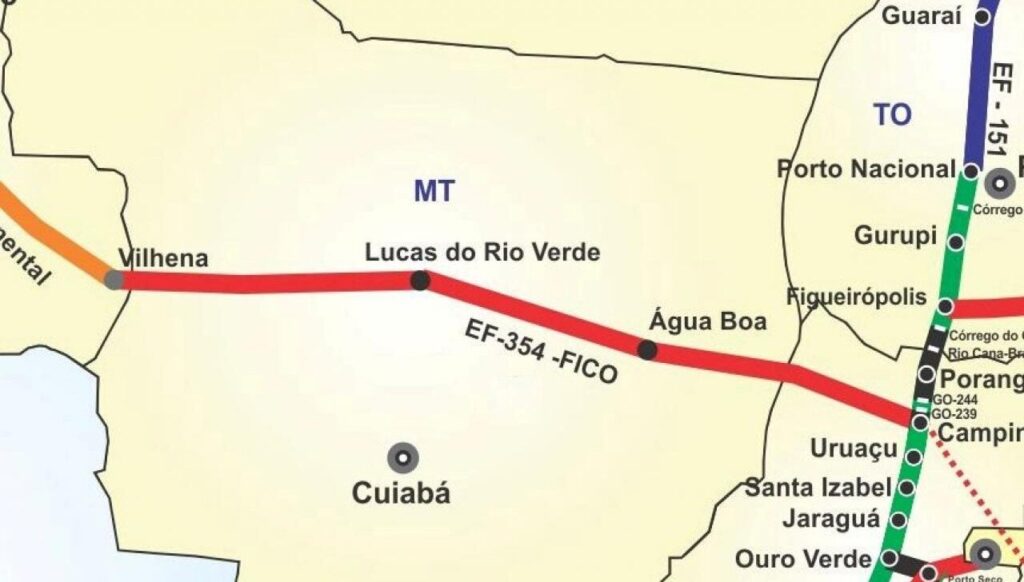
The Society for the Anthropology of Lowland South America (SALSA), an international scholarly organization composed of professors, students, and practitioners, joins its voice with those of A’uwẽ (Xavante) leaders and communities to demand that FUNAI, as well as all relevant state institutions and entities, respect A’uwẽ’s right to Free, Prior, and Informed Consent (FPIC) regarding infrastructure projects planned for implementation in A’uwẽ lands. Government authorities must allow A’uwẽ leaders to make informed decisions about the planned trajectory of the Central-West Integration Railway (Ferrovia de Integração do Centro-Oeste, FICO, EF-354) through their territories, as well as for highways such as BR-080, and small hydroelectric dams (PCHs) along the Rio das Mortes, the sacred river that borders A’uwẽ territories.1 The FICO, along with many other planned infrastructure projects, presents an existential threat to A’uwẽ.
The FICO will affect the A’uwẽ, 25,000 people inhabiting eleven fragmented Indigenous Lands within traditional A’uwẽ territory in eastern Mato Grosso state.2 The planned railway skirts the northern edge of the Areões Indigenous Land in an, as yet undemarcated, area between Areões and Pimentel Barbosa Indigenous Lands, and passes through A’uwẽ territory in Parabubure and Marechal Rondon Indigenous Lands. Its licensing process has been lengthy and flawed according to the fundamental normative basis for the right to FIPC in the Convention No. 169 of the International Labour Organization (ILO) concerning Indigenous and Tribal Peoples, adopted in 1989 and ratified by Brazil through Legislative Decree No. 143/2002, and subsequently promulgated by Decree No. 10.088/2019.
Moreover, FICO’s route affects approximately 31,000 Indigenous people from more than 20 distinct ethnic groups whose lands, cultures, and livelihoods will be severely impacted. The FICO is expected to disturb 24 Indigenous Lands within the Legal Amazon, including 23 in Mato Grosso and one in Rondônia3 (see also Salsa Twin Ocean Railroad Statement 20154; also Salsa letter to Sra. Dilma Rouseff regarding Indigenous rights, 20165).Health indicators among the A’uwẽ reveal severe negative impacts –including high infant mortality and chronic diseases – linked to territorial restriction, environmental contamination, and dietary changes.6
In addition to threats to many Indigenous Peoples’ traditional territories, the FICO project carries significant risk for negative environmental impacts. A report by InfoAmazonia reveals that the railway will cross 105 springs and tributaries belonging to three major Brazilian river basins — the Xingu, Tocantins-Araguaia, and Tapajós — and could contaminate and destroy vital waterways essential to the region’s ecological balance:
Among the 105 bodies of water expected to be impacted by the construction, the report indicates that three of them are at the source of the Xingu River: the Sete de Setembro River, the Batovi River, and the Curisevo River. The analysis specifies that the construction passes outside the Xingu Indigenous Land, but crosses the source springs for the major rivers that flow through the region, which could impact the quality and quantity of water in the Xingu Indigenous Land, also causing pollution and silting due to the construction.7
In accordance with Article 231 of the Brazilian Constitution, recognition and demarcation of Indigenous lands are urgent prerequisites. Historically, infrastructure project licensing infrastructure in A’uwẽ territory has ignored international conventions requiring Free, Prior, and Informed Consent (FPIC). Rights to FPIC must be respected for A’uwẽ and all Indigenous groups to be affected by the FICO.
In violation of ILO Convention 169 and UNDRIP’s requirement for FPIC, FUNAI and the railroad construction company INFRA S.A. have presented fragmented and selective information about the FICO railway to leaders of different Xavante Indigenous Lands. This deliberate strategy fosters division among communities and conceals the full extent of the project’s cumulative impacts on A’uwẽ Xavante lands and livelihoods. An Indigenous Component Study8 approved in 2013 deemed the FICO project unviable due to impacts on A’uwẽ life, yet subsequent licenses were issued without proper consultation. The current route affects unrecognized Indigenous lands, cemeteries, sacred sites, and insufficiently sized territories.
Although the government project website9 represents the concession process as involving studies, public consultations, agreements, bidding, approval, and contracts, it completely excludes the meaningful participation of the large number of affected Indigenous Peoples. Without genuine and good-faith consultation through A’uwẽ governance institutions, with representatives of all Xavante Indigenous Lands, and without respecting A’uwẽ sacred land and decision making protocols, Brazil risks more than legal noncompliance. It risks losing moral and environmental credibility on the world stage.
For A’uwẽ, FPIC requires full disclosure of all planned projects in A’uwẽ territory including their cumulative impacts, associated technical information, as well as deliberation through inter-territorial assemblies involving representatives from all Xavante Indigenous Lands, including those located in areas outside the strict geographical limits arbitrarily established by Brazilian Law, as reaffirmed in an August 2021 letter by the UN Committee on the Elimination of Racial Discrimination (CERD).10 Meaningful FPIC for A’uwẽ also requires decision-making free from coercion, manipulation or fragmentation, ample advance notice of meetings with government representatives, and respect for ceremonial calendars.
Given that construction for multiple infrastructure projects is planned in A’uwẽ land, leaders have a right to understand the full scope and impacts of all planned work. Article 32, paragraph 2 of the UNDRIP explicitly mandates that States shall consult and cooperate in good faith with Indigenous peoples to obtain their free and informed consent prior to the approval of any project affecting their lands or territories, particularly in connection with development infrastructures, utilization of water, etc. Consultation with A’uwẽ leaders regarding the various projects planned for their land must not be undertaken in piecemeal fashion as it is at present. The Indigenous Component of the licensing process (PBA-CI) for FICO must also include the scope of all planned work in A’uwẽ lands, and consultations must account for comprehensive impacts.
We strongly urge FUNAI to immediately stop pressuring A’uwẽ leaders and allow them to follow local, culturally appropriate and legally-informed decision-making practices related to their informed consent for the Indigenous Component of the FICO Environmental Impact Statement (PBA-CI). As Brazil’s state agency mandated to protect Indigenous Peoples, FUNAI is obligated to respect, in fact promote, A’uwe’s right to FPIC. Instead, A’uwẽ leaders report extreme pressure from FUNAI representatives that, in the words of the Federal Public Defender’s Office (DPU), reaches the level of ‘institutional harassment.’
Further, SALSA joins A’uwẽ leaders in demanding that FUNAI and authorities stop falsely representing to the public that leaders have accepted the PBA-CI for the FICO project.11 This claim misrepresents discussions regarding the FICO that have taken place in Xavante Indigenous Lands to date. FUNAI’s erroneous public portrayals that A’uwẽ leaders have approved the preparation of the PBA-CI for FICO in Xavante Indigenous Lands misrepresent the substance of discussions between A’uwẽ leaders and FUNAI representatives who have been visiting A’uwẽ communities and insisting that leaders accept the PBA-CI. A’uwẽ leaders have not endorsed the project because, as one leader states, “the FICO will cause irreparable damage to our lands and way of life.” In a meeting with FUNAI and other state representatives that took place just hours before his untimely death, the leader Silverio Tsereburã Tserenhib’ru Xavante emphatically stated, “We do not want the railroad!”12
Given that violations and irregularities render the current licensing process legally defective according to Brazilian constitutional law, they are administratively voidable under existing environmental licensing norms and internationally actionable under ILO Convention 169 and UNDRIP. It is therefore essential that the Brazilian state immediately:
1. Stop pressuring A’uwẽ leaders to accept FICO and the flawed PBA-CI without respecting their right to FPIC according to international standards;
2. Ensure and promote A’uwẽ’s right to FPIC and traditional lands. Restart consultations through a process that respects A’uwẽ governance, provides comprehensive, scientifically informed information about all infrastructure projects planned for implementation in A’uwẽ traditional land, and includes representatives from all Xavante Territories;
3. Cease misinformation campaigns and stop publicly representing A’uwẽ as having accepted the existing PBA-CI;
4. Accelerate A’uwẽ land demarcation.
As scholars who work with the Indigenous Peoples of Brazil and who possess intimate, detailed knowledge of their situations, we are extremely concerned by the Brazilian state’s disregard and for A’uwẽ’s right to Free, Prior, and Informed Consent (FPIC) regarding planned infrastructure projects in in their lands, its pressure on Auwẽ leaders, and its misrepresentation of their position regarding FICO. We strongly urge authorities respect Auwẽ’s rights and those of all Indigenous people affected by FICO.
Sample mails and contacts:
PDF versions of the statement:
https://salsa-tipiti.org/wp-content/uploads/2026/04/SALSA-Declaration-04-04-26.pdf [English]
https://salsa-tipiti.org/wp-content/uploads/2026/04/SALSA-Declaration-04-04-26-PT.pdf [português]
https://salsa-tipiti.org/wp-content/uploads/2026/04/SALSA-Declaration-04-04-26-ES.pdf [español]
- Nota Jan. 2026 áos Ministra Sônia Guajajara. MPI; Joênia Wapichana. FUNAI; Lucia Alberta Andrade Oliveira; DGAT/FUNAI; Dr. Guilherme F. Tavares. MPF, Dr, Renan Sotto-Mayor DPU; Rodrigo Agostinho/IBAMA. Associação Xavante Warã, and “Carta Aberta de Repúdio do Povo A’uwe Xavante Contra a Construção da Ferrovia de Integração do Centro Oeste – FICO,” signed by Lideranças da T.I. Parabubure e Representantes das 09 T.Is Xavante do Mato Grosso, Aldeia São José – Wairene, T.I. Parabubure, 07 March 2026. See also, Santana, F. 17 February 2026, COIAB Denuncia Pressão e Falhas em Consulta a Indígenas sobre Ferrovia no MT https://agenciacenarium.com.br/coiab-denuncia-pressao-e-falhas-em-consulta-a-indigenas-sobre-ferrovia-no-mt/?fbclid=PAT01DUAQD64dleHRuA2FlbQIxMABzcnRjBmFwcF9pZA81NjcwNjczNDMzNTI0MjcAAadqRk2bLAs8wASd92msp2RE76hBGTBIMXgW1SRFDfYioL84G-tF-6ShPQmNpQ_aem_3_05LARFDmWdpSLX6S3tqw, A’uwẽ (Xavante) em Brasília denuncia pressão por ferrovia e cobra demarcação de territórios no Mato, CIMI, https://www.flickr.com/photos/conselhoindigenistamissionario/albums/72177720332355860/ and “A gente quer a demarcação do nosso território e não ferrovias”, afirmam as lideranças A’uwẽ em incidência política em Brasília,” CIMI, March 6, 2026 https://cimi.org.br/2026/03/liderancas-auwe-incidencia-brasilia/ , Fernande, Euclides, “Lideranças Xavante se reúnem em Mato Grosso para defender o Cerrado com supervisão salesiana,” Salesianos: Missão Salesiana de Mato Grosso, 10 march 2026, https://www.missaosalesiana.org.br/liderancas-xavante-se-reunem-em-mato-grosso-para-defender-o-cerrado-com-supervisao-salesiana/ ↩︎
- According to the State agency, Xavante Special Indigenous Health District (DSEI Xavante), “[Xavante] has a population of 25,364 Indigenous people, who live in 363 villages, distributed across 14 municipalities and 6 Base Centers.” ↩︎
- https://terrasindigenas.org.br/pt-br/noticia/229242 ↩︎
- SALSA Statement on the Twin Ocean Railroad, 2 July 1, https://salsa-tipiti.org/piac/action-items/twin-ocean-railroad-statement/ ↩︎
- Indigenous Human Rights in Brazil: Salsa Letter to Dilma Rouseff, 23 February 2016, https://salsa-tipiti.org/piac/action-items/indigenous-human-rights-in-brazil/ ↩︎
- https://www.matogrossodosul.fiocruz.br/areas-tematicas/saude-dos-povos-indigenas/mudancas-socioambientais-saude-e-nutricao-entre-o-povo ↩︎
- https://infoamazonia.org/2025/04/17/ferrovia-de-integracao-centro-oeste-afetara-24-terras-indigenas-em-mato-grosso-e-rondonia/ and https://terrasindigenas.org.br/pt-br/noticia/229242 ↩︎
- Azanha, G., 2013. Estudos Etnoecológicos dos Impactos Nas TIs Parabubu-Culuene, Areões, Pimentel Barbosa e Marechal Rondon, Povo Xavante. Componente Indígena do Processo de Licenciamento da EF-354-Xavante ↩︎
- https://ppi.gov.br/projetos/corredor-ferroviario-leste-oeste/ ↩︎
- https://drive.google.com/file/d/1aiqSoHxP3QbI3E54R3j1LOaMNbuoXn9b/view ↩︎
- See, for example, Feburary 10, 2026, OFÍCIO No 317/2026/DIGAT/FUNAI, letter to Sr. Guilherme Fernandes Ferreira Tavares, from Lucia Alberta Andrade de Oliveira, re: Licenciamento ambiental da Ferrovia de Integração do Centro-Oeste/EF-354 (FICO). Referência: Procedimento Administrativo no 1.20.002.000403/2025-57. ↩︎
- See, for example, “In Memorium: Silvério Tserebu’rã Tserenhib’ru Xavante,” Cultural Survival, https://www.culturalsurvival.org/news/memoriam-silverio-tserebura-tserenhibru-xavante ; Mortes: Cacique xavante lutou contra a passagem da ferrovia por su território. Folha de São Paulo, January 6, 2026. https://www1.folha.uol.com.br/cotidiano/2026/01/mortes-cacique-xavante-lutou-contra-a-passagem-de-ferrovia-por-seu-territorio.shtml ↩︎